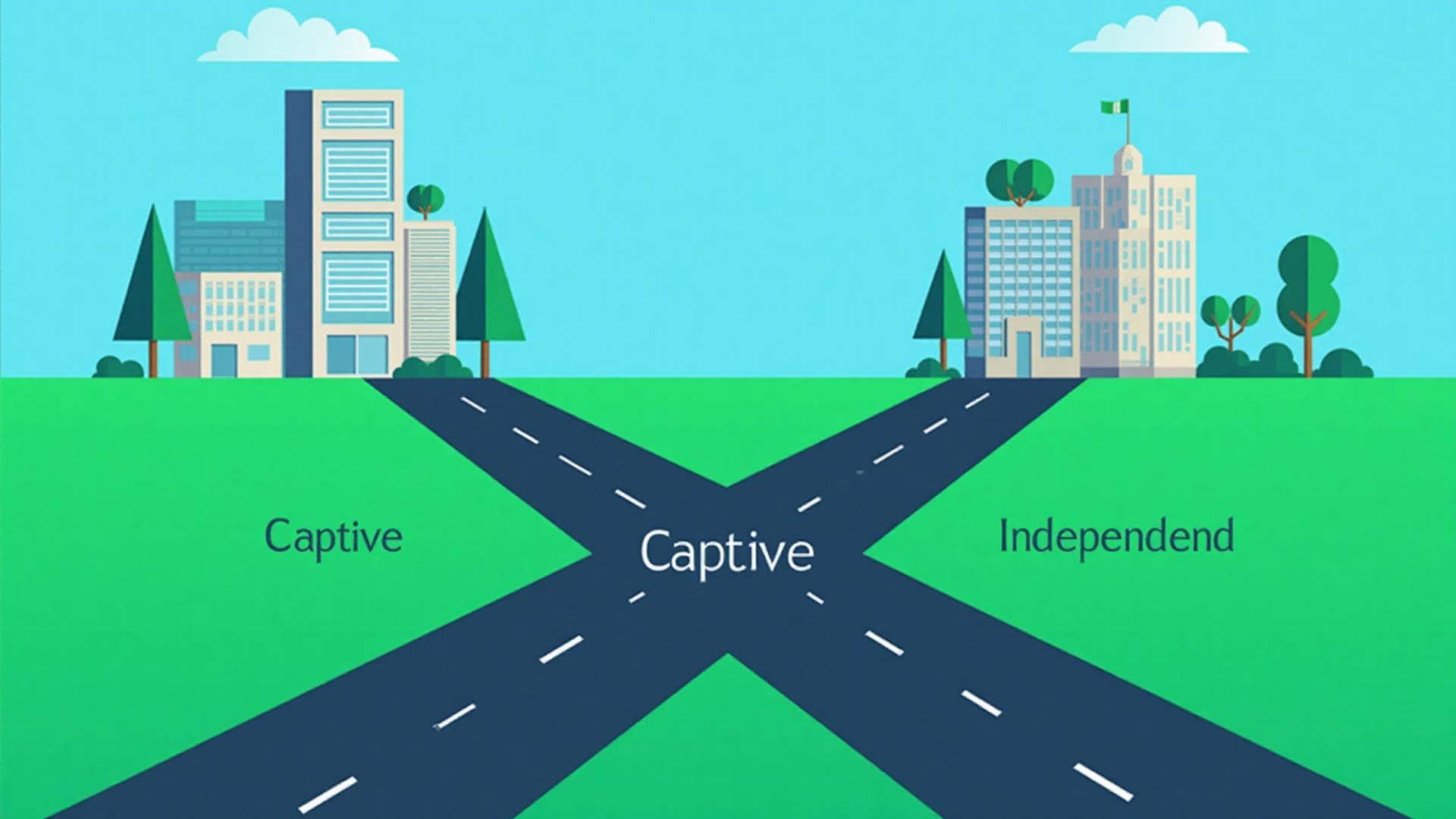
If you are deciding between joining a captive insurance agency and an independent IMO like The Price Group, you are facing one of the most important decisions of your insurance career. And most of the information you will find online is biased in one direction or the other.
Captive agencies have billion-dollar brands and massive marketing budgets. Independent IMOs have flexibility and higher commissions. Both will tell you their model is better. Neither is being completely honest.
This is my attempt at a genuinely balanced comparison. Yes, I run The Price Group and I obviously believe in the independent model. But I have also watched agents leave captive agencies and succeed with us, and I have watched agents leave us and do well at captive agencies. The right choice depends on who you are and what you want.
Key Takeaways
- Captive agents sell one company's products. Independent agents sell products from multiple carriers
- Independent agents typically earn higher commissions (80 to 110%) vs captive agents (40 to 60%)
- Captive agencies provide more brand recognition and sometimes a base salary or draw
- Independent agents own their book of business. Captive agents usually do not
- The Price Group offers the flexibility of independent with the training infrastructure typically found only at captive agencies
- Neither model is universally better. The right choice depends on your priorities
What "Captive" and "Independent" Mean
Captive agent: You are contracted with one insurance company and can only sell their products. Examples: New York Life, State Farm, Northwestern Mutual, Allstate, Farmers. You are typically classified as a W-2 employee or a statutory employee with some benefits.
Independent agent (through an IMO): You are contracted with multiple insurance carriers through an Insurance Marketing Organization. You sell whatever product best fits your client's needs. You are a 1099 independent contractor who owns your own business.
The Comparison
Commissions
Captive agencies: First-year commissions typically range from 40% to 60% of the annual premium. Some captive agencies offer a base salary or draw against commissions during your first year, which provides income stability but reduces your long-term earnings.
The Price Group (independent): First-year commissions typically range from 80% to 110% of the annual premium. No base salary, but the higher commission rate means each sale is worth significantly more.
Example: A $100 per month policy ($1,200 annual premium):
- Captive at 50% commission: $600 per sale
- TPG at 90% commission: $1,080 per sale
Over 50 sales in a year, that commission difference is $24,000 in additional income for the same amount of work.
Product Range
Captive agencies: You sell one company's products. If that company does not have a competitive product for a particular client, you either force-fit a suboptimal product or lose the sale. This is the single biggest disadvantage of the captive model.
The Price Group: You have access to multiple A-rated carriers. If Carrier A declines your client due to health issues, you can submit to Carrier B, C, or D. If one carrier's rates are not competitive, you offer a different carrier. This flexibility means fewer lost sales and better outcomes for your clients.
Training
Captive agencies: The brand-name captive agencies have well-established training programs. New York Life's training program is months long. Northwestern Mutual has a comprehensive development system. The training is real and it is good.
However, captive training is focused on selling that company's specific products and sales process. If you leave, the skills transfer but the product knowledge does not.
The Price Group: Our ALS-30 program is a 30-day structured onboarding with daily live training, scripts, role-play, call review, and mentorship. We train NEPQ-based selling which is product-agnostic and transfers to any insurance product or carrier.
We also provide daily training beyond the first 30 days, the Virtual Call Center, and direct access to David Price. Most captive agencies do not offer ongoing daily training after your initial onboarding period.
Book of Business Ownership
Captive agencies: In most captive arrangements, the company owns the book of business. If you leave, your clients stay with the company. Your years of work building relationships walk out the door without you.
Some captive agencies offer partial ownership or vesting schedules, but full ownership is rare.
The Price Group: You own your book of business. Period. If you leave, your policies come with you. The renewal commissions you have earned continue to pay you. Your book of business is an asset you can sell, will, or leverage.
This is one of the most significant financial differences between the two models. A 10-year independent agent has built a sellable asset worth tens of thousands of dollars in renewal income. A 10-year captive agent may leave with nothing.
Brand Recognition
Captive agencies: State Farm, New York Life, and Northwestern Mutual are household names. When you tell someone you work for New York Life, they immediately understand what you do. The brand opens doors and provides instant credibility.
The Price Group: We are well-known within the insurance industry but we are not a household name. When you sell as an independent agent, you are building your own brand. Your clients know you, not your IMO.
This matters less than you think in telesales. Your prospects are responding to a phone call, not walking into a branded office. They care whether you can help them, not whether your company has a Super Bowl commercial.
Work Model
Captive agencies: Most captive agencies expect you in an office. Some have adapted to hybrid models post-2020, but the default is still physical presence, team meetings, and office hours.
The Price Group: 100% remote. You work from home. No commute, no office politics, no dress code. Your schedule is flexible within the structure of daily training and calling hours.
Career Path
Captive agencies: The typical path is agent to team lead to district manager to regional manager. You climb a corporate ladder within one company. The upside is stability and clear progression. The downside is that your career is tied to one company's structure and decisions.
The Price Group: The path is agent to agency builder. You sell, then optionally recruit and train your own team. There is no corporate ladder because you own your business. The upside is unlimited growth and true ownership. The downside is that you build it yourself.
Costs
Captive agencies: Some provide office space, technology, and basic leads. Others require you to purchase leads at inflated prices or generate your own through networking and referrals. Ask about hidden costs before joining.
The Price Group: Zero cost to join. No desk fees, no technology fees, no monthly platform charges. Your only costs are your license and the leads you choose to purchase at transparent prices. See our lead costs.
Who Should Choose a Captive Agency?
Be honest with yourself. A captive agency might be better for you if:
- You want a base salary or draw during your first year and cannot afford commission-only risk
- You value brand recognition and want to tell people you work for a household name
- You prefer working in an office with a team around you physically
- You want a structured corporate career path with management opportunities
- You are interested in selling complex products like indexed universal life, annuities, and estate planning that benefit from the captive agency's product training
- You do not mind selling only one company's products
Who Should Choose The Price Group?
The independent IMO model through TPG is likely better if:
- You want to work from home with full schedule flexibility
- You want higher commissions on every sale (80 to 110% vs 40 to 60%)
- You want to own your book of business as a sellable asset
- You want access to multiple carriers so you can always offer the best product for each client
- You want to sell by phone without driving to appointments
- You want daily training and mentorship from a founder who is still in the trenches
- You want to build your own business, not climb someone else's corporate ladder
- You are comfortable with commission-only income (no base salary)
The Hybrid Truth
Here is what neither side tells you: many of the most successful agents in the industry started captive, learned the fundamentals, and then went independent.
The captive model gives you structure, product training, and sometimes a financial safety net during your learning period. The independent model gives you freedom, ownership, and higher income once you can produce consistently.
If you are brand new and terrified of commission-only income, a captive agency with a training salary might make sense for your first 6 to 12 months. But know that you are trading long-term income and ownership for short-term stability.
If you are ready to bet on yourself, or if you have already proven you can sell (even in a different industry), the independent model through an IMO like The Price Group will almost certainly produce higher income and a better lifestyle over any time horizon longer than 12 months.
What Makes The Price Group Different From Other IMOs
Choosing independent is the first decision. Choosing which IMO is the second.
What sets The Price Group apart from other independent IMOs:
- Daily live training led by David Price personally, not a recorded library
- AI-powered, exclusive leads that are verified and data-enriched before delivery (see lead details)
- The Virtual Call Center where agents dial together for accountability and real-time coaching
- ALS-30 structured 30-day onboarding that takes you from licensed to producing
- $0 to join with transparent lead pricing
- Not an MLM (read the full explanation)
For a broader comparison of top IMOs, read Best IMO for New Agents.
The Bottom Line
Captive and independent are both legitimate paths to a successful insurance career. The right choice depends on your financial situation, your risk tolerance, your work style preferences, and your long-term goals.
If ownership, flexibility, higher commissions, and remote work matter to you, the independent model wins. If brand recognition, office structure, and a training salary matter more, captive agencies have real advantages.
We built The Price Group for agents who want to own their career, not rent it. If that sounds like you, start here. If you are still deciding, read Captive vs Independent Insurance Agent for the broader industry comparison.
Want to see how TPG compares to specific independent IMOs too? Check out our full comparison hub for head-to-head breakdowns.